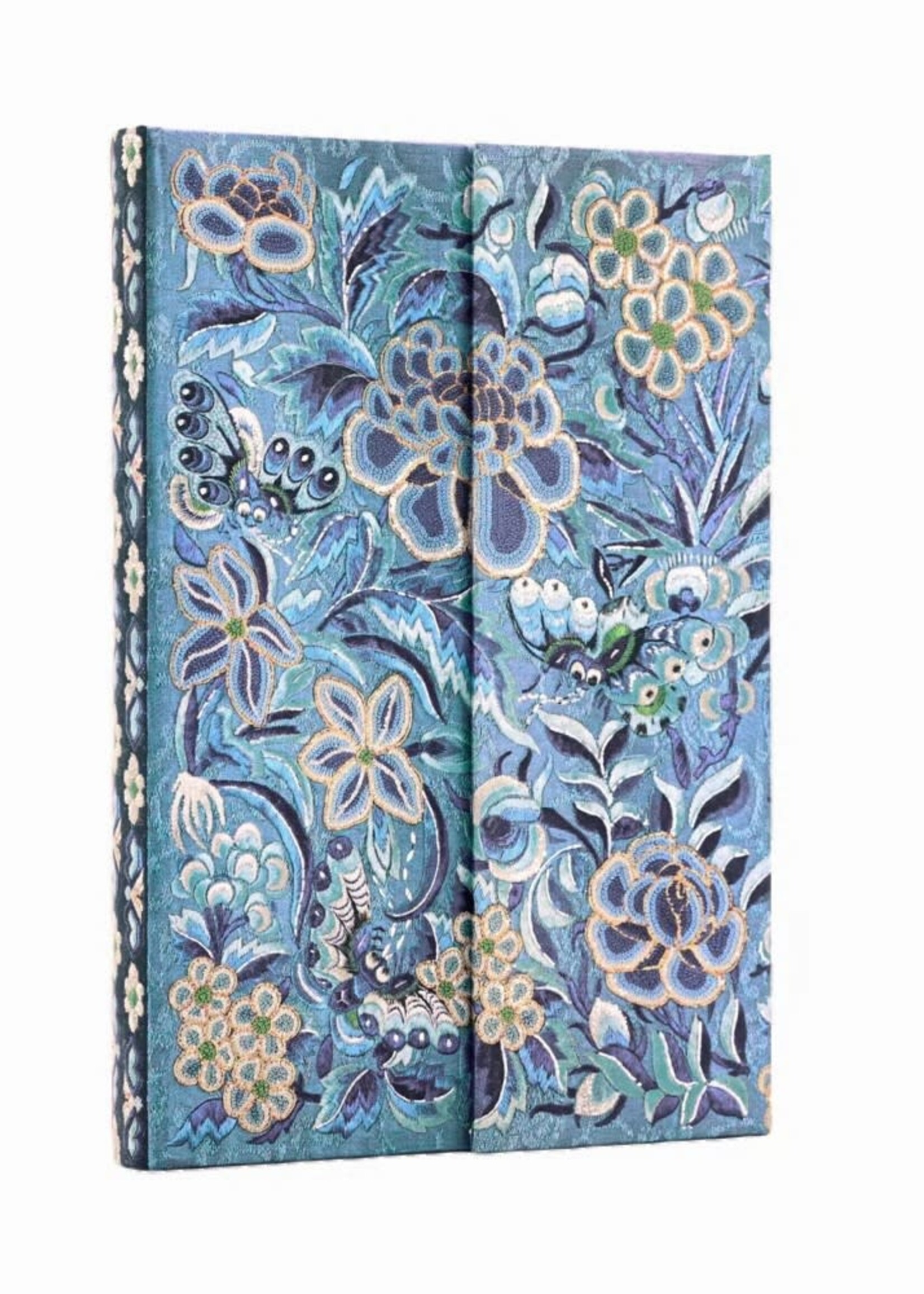
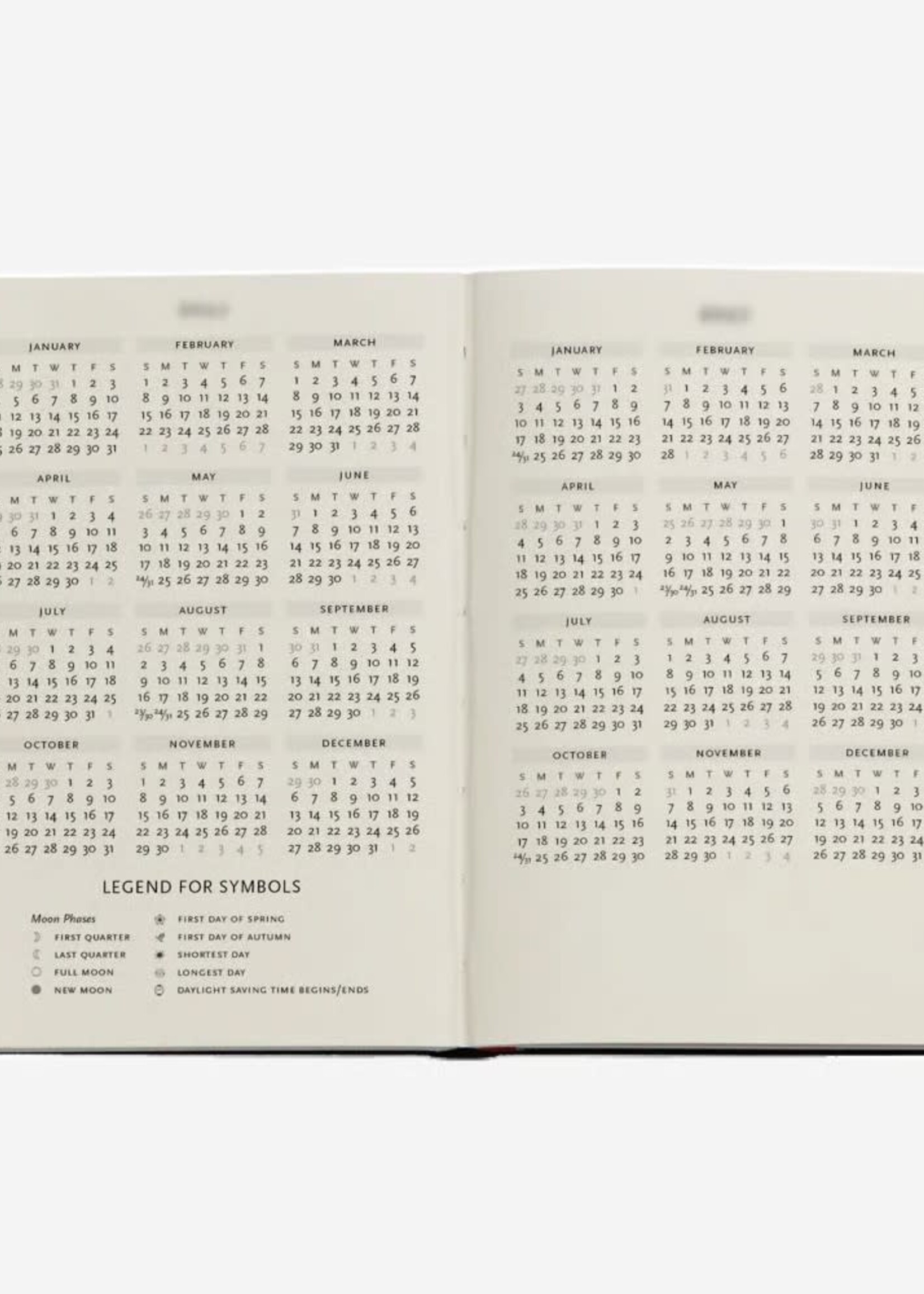
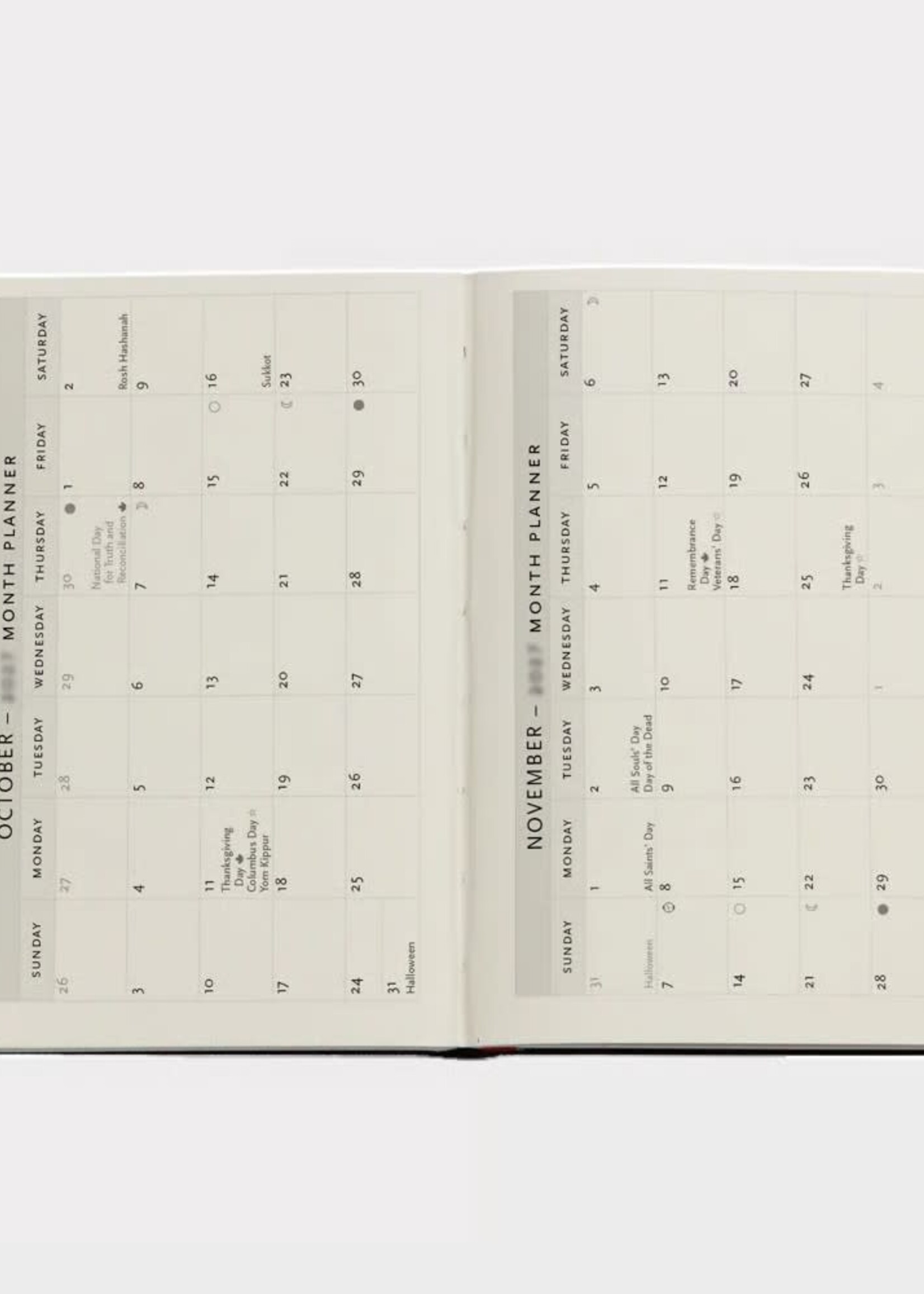
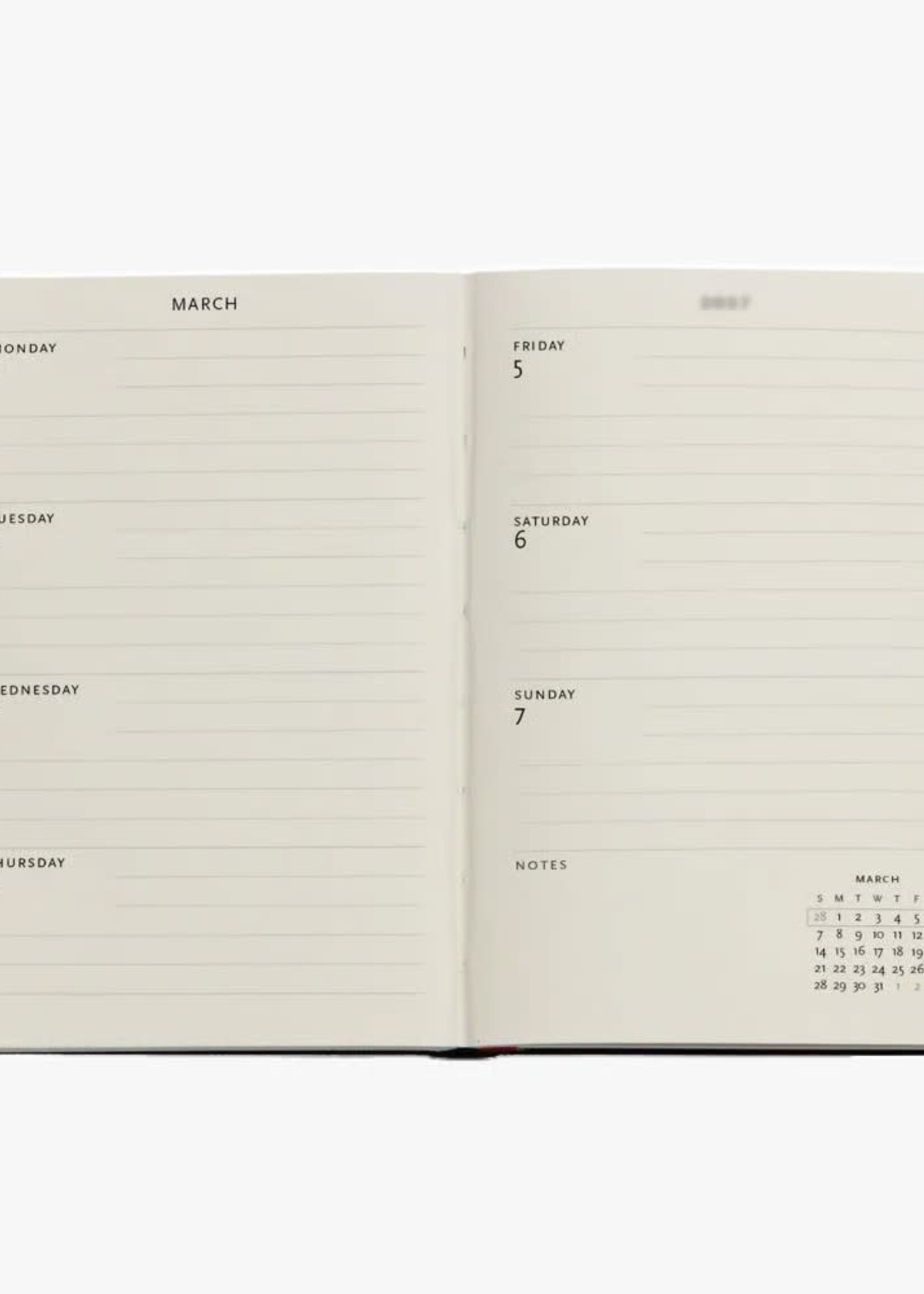
This is a hardcover Paperblanks agenda.
The beauty of Chinese embroidery is exquisitely represented on our Blue Willow cover. The design reproduced here is taken from a panelled skirt called a mamianqun, or “horse face” skirt, a garment worn by Han Chinese women in the traditional dress style known as Hanfu. An ancient form of Chinese clothing, Hanfu dates back more than three millennia to the Song and Liao dynasties, when it became popular due to both its functionality and its aesthetic style.
Originating in the Qing Dynasty (1850–1900), the variation of mamianqun on our cover is called a langaqun, a style characterized by its sharp pleats, often trimmed in black. Shown here is an example made from delicate pale blue silk damask, embroidered in golden silk thread and edged with silk satin.
Hanfu style has shaped the traditional clothing of many cultures including the Korean hanbok and the Japanese kimono. The mamianqun in particular has undergone various changes throughout history, surviving multiple dynasties and going on to influence style in the Western world by finding its way into the pages of Vogue and onto fashionable British royalty.
The mamianqun represents an important aesthetic and cultural concept in the life history of Chinese women. The choice of colour, pattern, and ornamentation on the mamianqun reflected situational and social contexts and could communicate relationship standing during weddings, as well as the hierarchy between women in a household.
The construction of the mamianqun reflects its roots in practicality as well as style. Traditionally made for horse-riding, the unique overlapping of the garment allows for greater ease of movement when both riding and walking. The latter was particularly necessary for Chinese women who had bound feet and walked with small, shuffling steps. This delicate movement and the fall of the mamianqun’s pleats compelled Chinese poets to liken the effect to a “waving of the willow.”
Today this Blue Willow design can be found in the Victoria and Albert Museum’s East Asia collection. By reproducing this wonderfully intricate and vibrant embroidered traditional Chinese clothing, we hope to share a piece of the rich history of the Han Chinese and celebrate the depth of Hanfu’s aesthetic and cultural influence that endures to this day.
The design reproduced here is taken from a panelled skirt known as a mamianqun, a garment worn by Han Chinese women in the traditional Hanfu dress style. Hanfu dates back more than three millennia to the Song and Liao dynasties, when it became popular due to both its functionality and its aesthetic style.